
Free Inspections, Assessments & Testing
Mold RemediationMold Remediation & Removal
Mold can threaten your health and your home, often hidden behind walls and under floors. We find it, remove it safely, and stop it from coming back, across Westchester, Long Island (Nassau & Suffolk) and New York City.
5.0 from 19 Google reviewsMold is a health issue, not just a stain
Mold spreads through moisture and can trigger allergies and respiratory problems. Painting over it or wiping it away does not solve the problem. Safe remediation means containing the area, removing the source, and preventing regrowth. Restorehaus is licensed for exactly this work: we hold New York State Department of Labor mold remediation contractor licence no. 26-6956G-SHMO, issued under Article 32 of the Labor Law.
Our mold removal and remediation process
- Inspection to locate mold and the moisture feeding it
- Containment to keep spores from spreading during removal
- Safe removal of affected materials using proper protocols
- HEPA cleaning and treatment of the affected area
- Fixing the moisture source so the mold does not return
Black mold removal, done properly
Most people who search for black mold removal have found dark growth on drywall, in a basement or around a window. The colour alone does not tell you which mold it is or how serious it is, and it does not change how it should come out. Any significant growth gets the same treatment from us: containment, removal of whatever cannot be cleaned, HEPA cleaning, and fixing the moisture that let it grow. When you compare mold removal companies, ask whether the contractor is licensed by New York State, which we are, and whether they will find the water source rather than only treating what you can see.
Why homeowners choose Restorehaus
- 24/7 emergency response with crews on standby in Westchester, Putnam, Lower Fairfield, NYC, Long Island and Northern New Jersey
- IICRC certified, licensed, and fully insured
- One team from mitigation through full reconstruction
- We document everything and bill your insurance directly
Remediation is a containment discipline
The point of mold remediation is not to kill mold. It is to remove it and to correct whatever made the building wet, without spreading spores through the rest of the house while you do it. Disturbing growth without containment is how a problem confined to one wall cavity becomes a problem in four rooms.
Find the water first
Mold is a symptom. Something is wet, or was wet and never properly dried. Before remediation starts we locate the moisture source with meters and thermal imaging, because remediating without fixing the source guarantees regrowth. Sometimes the source is a plumbing failure, sometimes a roof or flashing detail, sometimes condensation from a ventilation problem, and sometimes simply humidity that has been sitting above sixty percent for months.
Containment and negative air
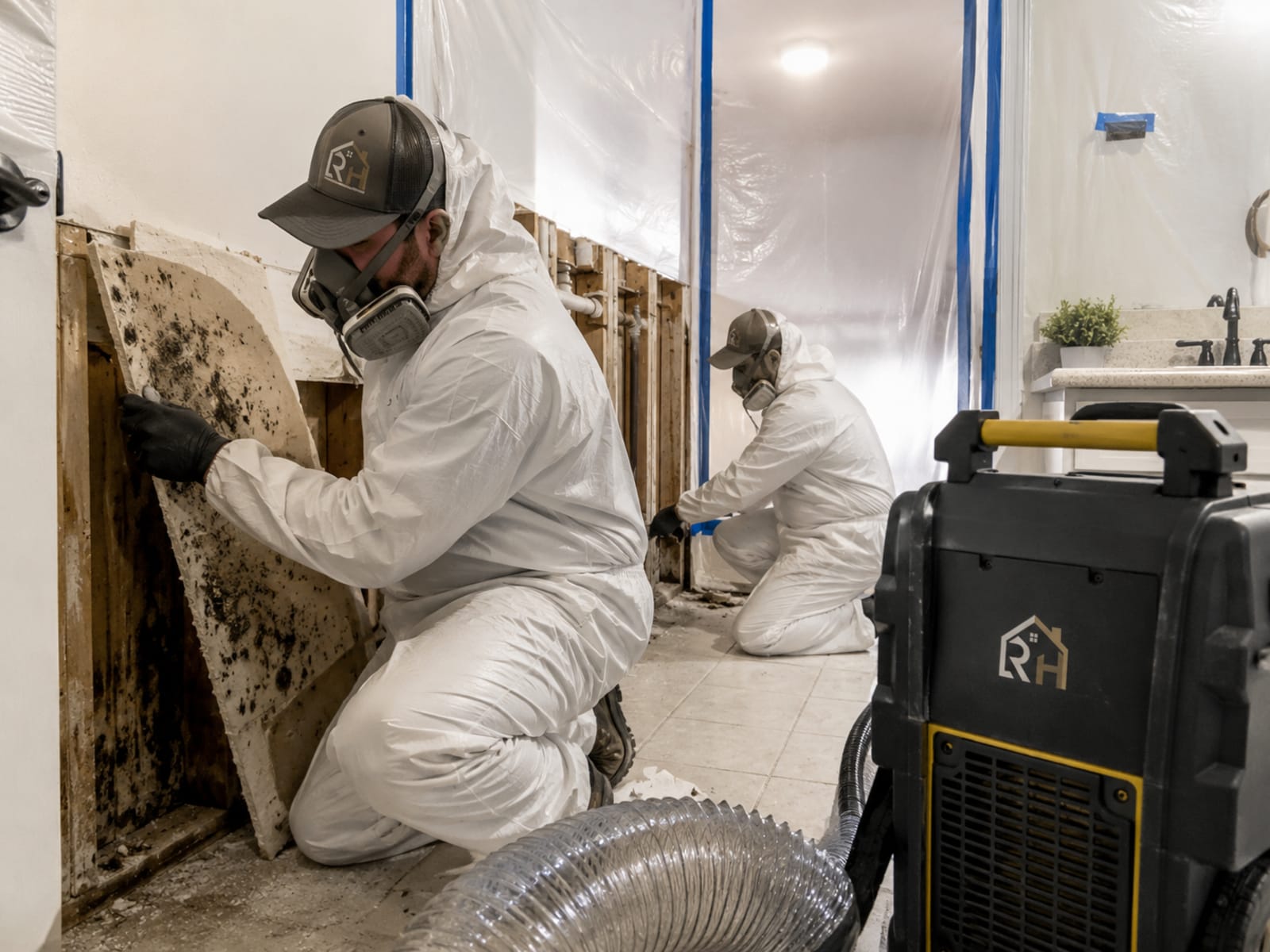
The work area is sealed with physical barriers, and negative air pressure is established so that air flows into the containment and never out of it. Air scrubbers with HEPA filtration run throughout. HVAC serving the area is shut down and returns are sealed so the system cannot distribute spores to unaffected parts of the building. Technicians wear appropriate protective equipment.
Removal, not surface treatment
Porous materials with growth in them are removed and bagged inside containment, because you cannot reliably clean growth out of the paper facing of drywall or out of insulation. Semi-porous and non-porous materials such as framing are HEPA vacuumed and cleaned, and treated where appropriate. This is also where bleach earns its bad reputation: on porous material it is mostly water, the water soaks in, the chlorine stays on the surface, and you have bleached the stain while feeding what is underneath.
Drying, then verification
After removal the assembly is dried to a documented standard, because remediation into a wet cavity is temporary. Where independent verification is appropriate, clearance testing by a third party is the cleanest way to confirm the work rather than taking the remediator at their word. We are happy to work alongside an independent indoor air quality consultant, and on larger jobs we recommend it.
How long it takes
A contained area of a few square feet may be a one or two day job. Growth across multiple rooms, or inside a wall system that has been wet for a long time, runs a week or more, plus drying and rebuild. Scope is what drives it, and scope is not knowable until the moisture mapping is done.
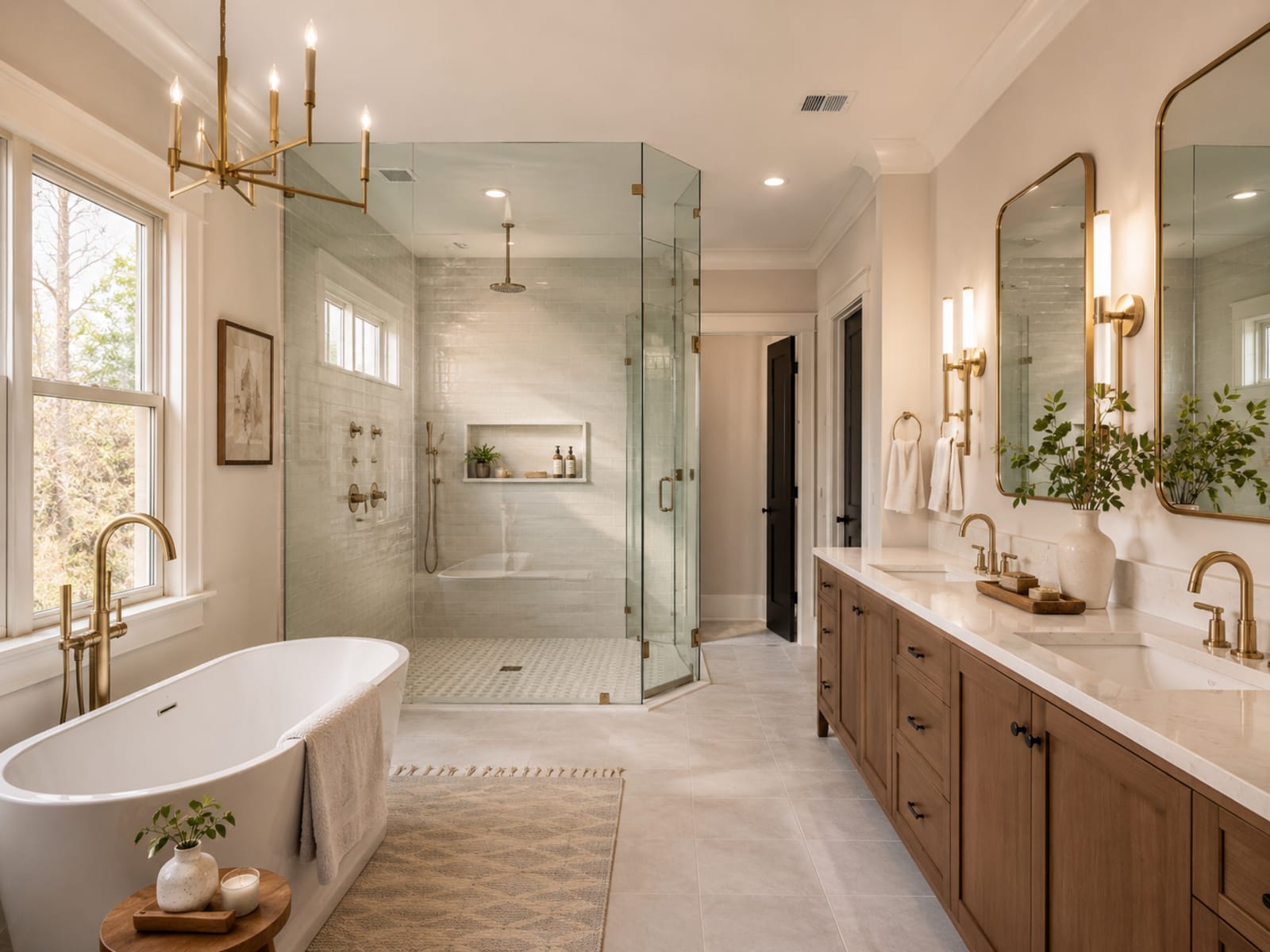
From contaminated to clean and safe
Mold questions
Do I need a mold test before I call anyone?
Can I just clean it with bleach?
Do we have to move out?
Is black mold dangerous?
Will it come back?
Does insurance cover mold?
What customers say
5.0 stars across all 19 Google reviews.
I called Restorehaus Restoration for mold remediation due to a recent AC leak that damaged our engineered wood flooring with visible black mold spots. Louis Volpe responded immediately, listened to my concerns, and carefully explained a detailed solution that would take all my needs into consideration. I was interviewing a few other contractors but ultimately decided to go with Lou and his team because of his can-do attitude. Lou speaks very clearly and confidently, he listens carefully to all my concerns, and he presents a clear plan of action with both knowledge and professionalism. First impressions speak volumes. The work was scheduled with precision, all parts explained in detail, and completed in a timely efficient manner. From promptly assembling the necessary paperwork including following rules for the building and certificate of insurance, to scheduling workers and bringing all necessary setup and cleanup materials, to providing photos and descriptions of work done along the process, the entire job was completed to my satisfaction as agreed upon, clean and professional work. I’m planning to change out my floors in the future and would be confident in considering Lou for any future renovations. I would highly recommend Lou and his team at Restorehaus Restoration for all your remediation and renovation needs.
They did an incredible job helping me with a bad mold problem in my basement. 100% recommend
Very thorough job. Got every spot, nice guys hard-working
Related restoration services
Water Damage Restoration
Fast extraction, structural drying, and full repair after floods, burst pipes, leaks, and sewage backups.
Learn moreFire and Smoke Damage Restoration
Soot and smoke removal, odor neutralization, and complete reconstruction after fire loss.
Learn moreStorm and Disaster Damage
Emergency board-up, roof tarping, water removal, and rebuild after wind, hail, and severe weather.
Learn moreFound mold? Do not wait.
Call Restorehaus for safe, certified mold removal across Westchester, Putnam, Lower Fairfield, NYC, Long Island and Northern New Jersey.